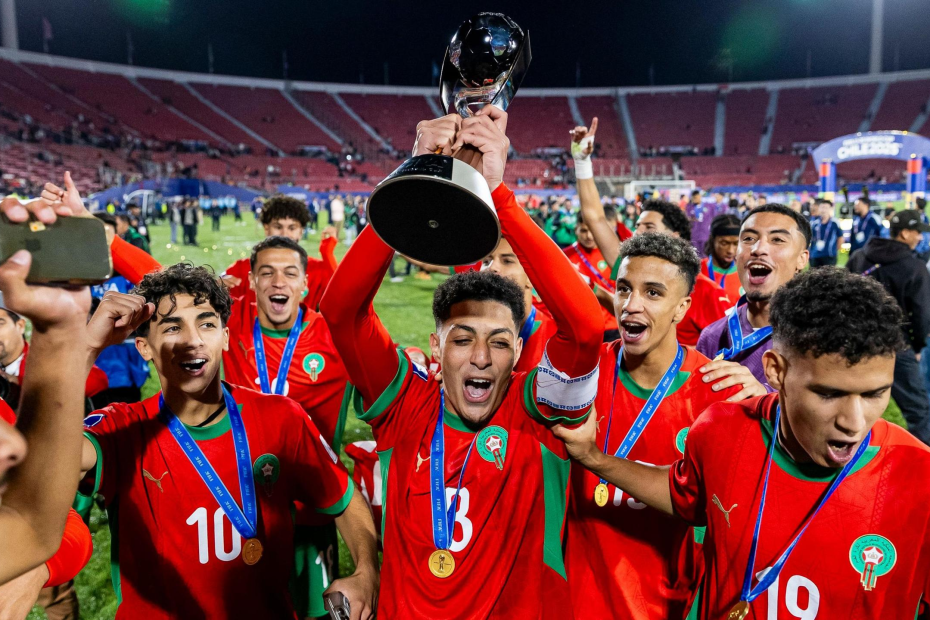
When the final whistle blew at Estadio Nacional Julio Martínez Prádanos in Santiago, Chile, Moroccan players collapsed to the ground in disbelief. Moments later, they were sprinting toward each other in a sea of red and green joy, Morocco had just made history by winning the 2025 FIFA U-20 World Cup. In front of a roaring crowd, they defeated Argentina 2–0, a victory that not only crowned them world champions but also marked a monumental step forward for African football.
This win was more than just a sporting triumph. It symbolized years of investment in youth development, discipline, and belief. For the first time ever, Morocco and indeed North Africa stood on top of the world at the U-20 level.
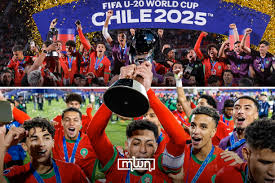
U20 Morocco lifting the World Cup
The Final That Changed Everything
The 2025 FIFA U-20 World Cup final saw Morocco face tournament favorites Argentina, a nation synonymous with football excellence. The young Moroccans, however, entered the pitch with quiet confidence and a clear game plan.
The star of the show was Yassir Zabiri, Morocco’s 19-year-old forward, who scored both goals in the final, one in each half, to lead his team to glory. Zabiri’s performance was nothing short of extraordinary. His pace, composure, and finishing ability gave Morocco a cutting edge that Argentina couldn’t match.
Head coach Hicham Loumari credited the team’s unity and work ethic for their success. “This win belongs to every Moroccan,” he said post match. “Our players fought for each other, for our country, and for the dream of African football.”
The 2–0 victory wasn’t a fluke, it was the result of tactical discipline, resilience, and a belief system built over years of preparation. Morocco’s defense stayed organized, the midfield pressed relentlessly, and Zabiri’s counter attacking runs created constant danger.
The Road to Glory
Morocco’s journey to the championship was anything but easy. Drawn in a tough group that included Brazil, Spain, and South Korea, many doubted their chances of even reaching the knockout rounds. Yet, Morocco not only advanced but topped their group, sending a clear message that they were not just participants but genuine contenders.
In the round of 16, they defeated South Korea with a last-minute winner that electrified fans back home. The quarterfinals saw them face the USA, where they claimed a 1–0 victory after a gritty defensive performance. The semifinal against France was perhaps the most dramatic moment of the tournament, a 1–1 draw that went to penalties, where Moroccan goalkeeper Amine Ouldali became a national hero by saving two spot kicks.
By the time Morocco reached the final, they had proven their strength, endurance, and tactical maturity. As ESPN reported, they were not just lucky, they were “disciplined, fearless, and remarkably composed under pressure.”
Why This Win Matters for Morocco and Africa
Morocco’s U-20 World Cup win is more than a trophy, it’s a symbol of progress. The country’s football federation has invested heavily in infrastructure and youth academies over the past decade, including the world class Mohammed VI Football Complex near Rabat. That investment has now paid off.
According to CAF Online, Morocco’s victory marks the first-ever U-20 world title for a North African nation and only the second time in history that an African country has won the tournament. It represents a changing tide, proof that African teams can compete with and defeat traditional powerhouses like Argentina, Brazil, and France at the highest youth levels.
For Morocco, this success builds on the legacy of the senior national team’s groundbreaking performance at the 2022 FIFA World Cup in Qatar, where they became the first African nation to reach the semifinals. The U-20 victory confirms that Morocco’s football success is not a one time miracle but part of a long-term national vision.
The Rise of Yassir Zabiri and a New Generation
Every great tournament has a breakout star, and for Morocco, that star is Yassir Zabiri. His two goals in the final secured his place in history and likely earned him attention from top European clubs. As Olympics.com noted, Zabiri’s composure and creativity mirror the style of Moroccan legends who have inspired generations.
But Zabiri is far from alone. The entire Moroccan squad displayed immense potential, from midfielder Hamza Dahmani’s leadership to defender Soufiane Kharbouch’s consistency. These players are products of Morocco’s youth academies, which emphasize technical skill, tactical awareness, and mental discipline from an early age.
Their triumph also highlights the growing professionalism of African football programs. Morocco’s success serves as motivation for other African nations to continue investing in their youth systems and infrastructure areas that have often been neglected in the past.
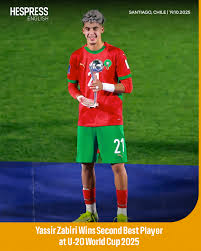
Yassir Zabiri lifting trophy at U20 World Cup
A Victory Beyond the Pitch
Morocco’s win reverberated far beyond the football field. Across the nation, spontaneous celebrations filled the streets from Casablanca to Marrakech. For many Moroccans, the triumph symbolized unity, pride, and national progress.
Local media described it as a “victory for hope.” It showed that with determination and vision, smaller nations can rise to global prominence. The players became role models for young Moroccans who dream of representing their country one day.
The impact was also cultural. This win brought North Africa and the Arab world together in celebration, a reminder that football is more than a sport; it’s a bridge that connects people and nations.
What Comes Next for Moroccan Football
The challenge now is to build on this momentum. Morocco’s football federation plans to expand youth development programs and strengthen its domestic league. Many of the U-20 players are expected to be called up to the senior national team within the next few years, creating a seamless transition for future success.
European scouts have already shown interest in several Moroccan players, and the win is likely to increase global visibility for the country’s footballing talent. This could lead to more Moroccan players in top European leagues, which in turn will feed experience and expertise back into the national program.
In a broader sense, Morocco’s win could inspire a new generation of African footballers. As head coach Hicham Loumari put it, “We showed the world that African football has heart, passion, and intelligence. This is just the beginning.”
Conclusion: A Legacy in the Making
Morocco’s U-20 World Cup win is more than a moment in sports history, it’s a turning point. It represents years of effort, vision, and belief in youth development. It unites a nation under one flag and reminds the world of Africa’s growing strength in global football.
From Yassir Zabiri’s goals to the roar of fans in Santiago, every detail of this victory tells a story of resilience and pride. Morocco’s achievement has set a new standard for what’s possible, not just for them, but for an entire continent hungry for recognition.
As the celebrations fade and the next tournaments approach, one thing is clear: Morocco’s football future looks brighter than ever.
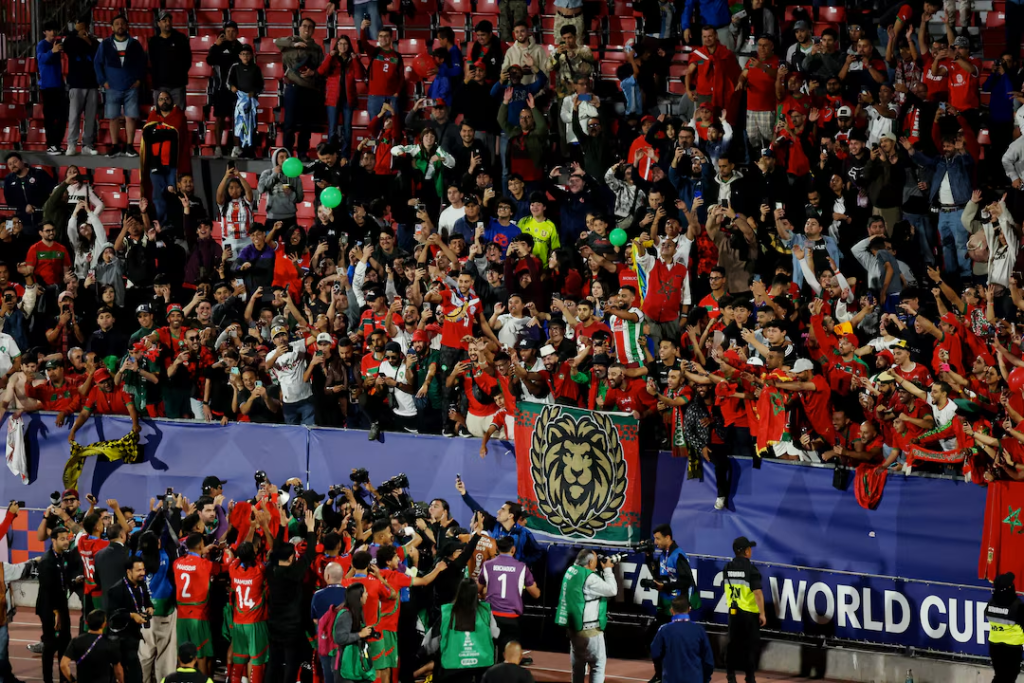
Fans celebrating with the U-20 Morocco Squad
Subscribe to our Newsletter to never miss when we drop News!