Barcelona’s resurgence in the current La Liga season represents one of football’s most compelling comeback stories. After years of financial turmoil, transitional struggles, and disappointing results, the Catalan giants have rediscovered their competitive edge and sit firmly in contention for the championship. Their pursuit of glory in the La Liga title race showcases resilience, tactical evolution, and the emergence of exciting young talent that promises a bright future for the club.
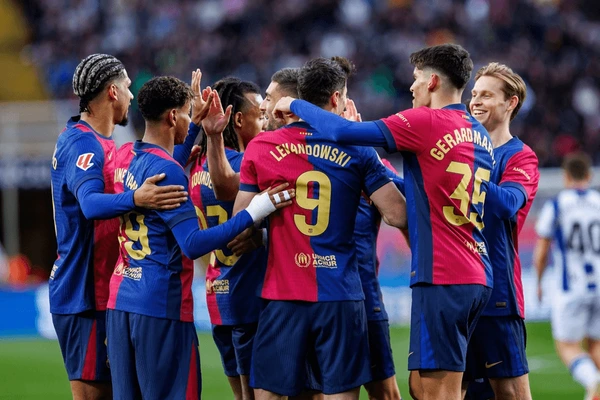
Barcelona players celebrating goal
Tactical Renaissance Under New Leadership
Barcelona’s transformation begins with tactical improvements that have restored defensive solidity without sacrificing their possession-based identity. The team has evolved from a possession-obsessed side that sometimes lacked directness into a more balanced unit capable of dominating possession while also exploiting transitions with clinical efficiency.
The defensive structure has improved dramatically compared to recent seasons. Barcelona now defends as a compact unit, with players understanding their pressing triggers and positioning responsibilities. This organization has resulted in La Liga’s best defensive record among title contenders, conceding just 19 goals through 21 matches. The improvement stems from collective commitment rather than individual brilliance, with every player buying into defensive responsibilities.
In possession, Barcelona maintains their traditional principles while adding more verticality and directness. They still dominate the ball through patient build-up play and intricate passing combinations, but now they’re quicker to exploit spaces behind defensive lines. This evolution makes them less predictable and more dangerous in transition, combining their technical excellence with improved tactical pragmatism.
The pressing system has become more intelligent and energy-efficient. Rather than pressing relentlessly regardless of circumstance, Barcelona now chooses moments carefully, pressing aggressively when they can win possession in dangerous areas while dropping into a compact shape when necessary. This selective pressing conserves energy while maximizing effectiveness.
The New Generation Comes of Age
Pedri has emerged as Barcelona’s midfield maestro, orchestrating play with maturity beyond his years. His technical ability, vision, and decision-making reflect the best traditions of Barcelona’s midfield heritage. Pedri’s ability to receive the ball under pressure, turn opponents, and deliver precise passes makes him the fulcrum around which Barcelona’s attacking moves develop. His football intelligence allows him to find spaces between lines and provide the creative spark needed to unlock compact defenses.
Gavi complements Pedri perfectly with his energy, intensity, and fearless approach. Where Pedri provides elegance and technical precision, Gavi brings aggression and physicality that adds balance to Barcelona’s midfield. His pressing intensity sets the tone for the team’s defensive work, while his forward runs and goal-scoring threat add another dimension to Barcelona’s attack. Together, Pedri and Gavi represent the future of Barcelona’s midfield and embody the club’s philosophy of developing homegrown talent.
Robert Lewandowski continues to deliver goals with remarkable consistency despite approaching his mid-thirties. The Polish striker’s positioning, finishing ability, and link-up play make him indispensable to Barcelona’s attacking structure. His experience in winning titles across multiple leagues provides leadership and composure in crucial moments. Lewandowski’s ability to score different types of goals—headers, tap-ins, long-range strikes—gives Barcelona multiple attacking options.
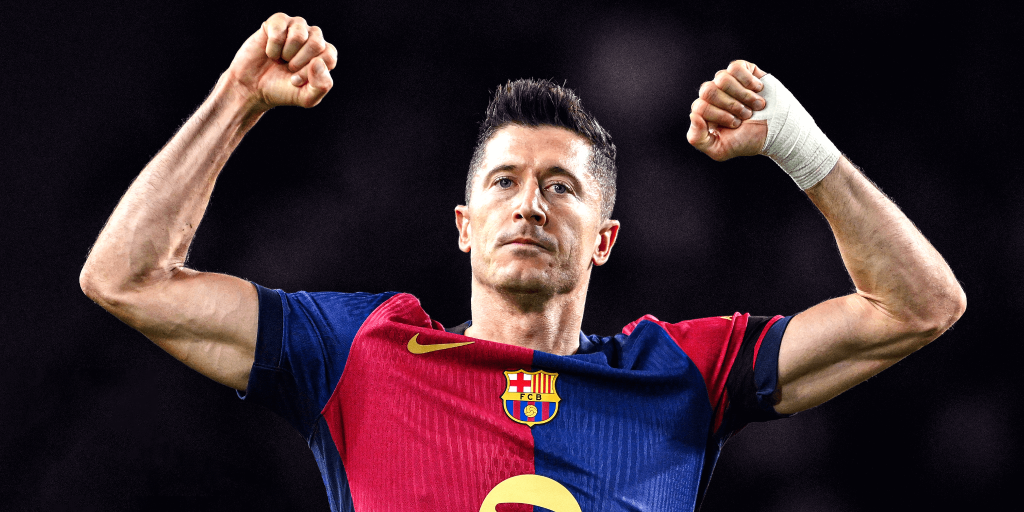
Lewandowski celebrating after scoring goal
The emergence of La Masia graduates throughout the squad has reconnected Barcelona with its youth development philosophy. These players understand the club’s playing style instinctively, having trained in Barcelona’s systems since childhood. Their technical quality and tactical intelligence allow seamless integration into the first team, providing squad depth while maintaining stylistic consistency.
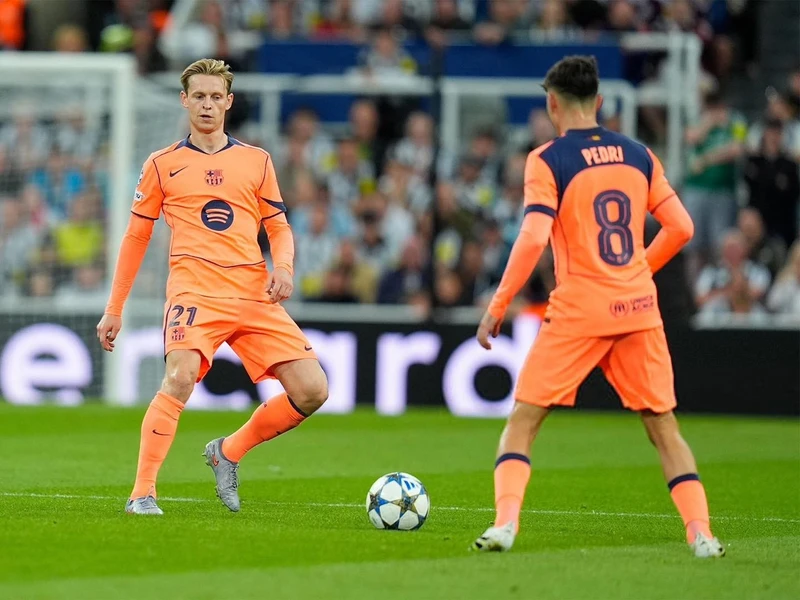
Pedri and De Jong controlling the Midfield
Overcoming Financial Constraints
Barcelona’s financial struggles have forced creative solutions and tactical adjustments. The club’s inability to compete with Real Madrid’s spending power in the transfer market has necessitated greater reliance on youth development and smart, value-oriented signings. This constraint has actually benefited the team by forcing a coherent sporting strategy focused on long-term sustainability rather than short-term fixes.
The squad harmony and collective spirit have been exceptional despite financial limitations. Players have accepted salary reductions and modified contracts to help the club navigate its financial crisis, demonstrating commitment to Barcelona’s recovery. This unity creates a powerful team spirit where players fight for each other and the badge, compensating for any deficiencies in squad depth compared to wealthier rivals.
Financial fair play regulations have limited Barcelona’s flexibility in squad building, but the team has adapted remarkably well. The coaching staff has maximized available resources through tactical innovation and player development, proving that strategic intelligence can overcome financial disadvantages in competitive balance.
The Injury Concern
Injuries represent Barcelona’s most significant challenge in the La Liga title race. Key players have missed extended periods throughout the season, disrupting tactical plans and forcing constant adjustments. The medical staff faces enormous pressure to keep the squad healthy during the crucial final months when fixture congestion intensifies and physical demands reach their peak.
The squad depth limitations mean injuries to key players create disproportionate impacts on team performance. While Real Madrid can rotate world-class talent without significant quality drop-off, Barcelona must carefully manage player workloads to prevent injuries while maintaining competitive standards. This balancing act becomes increasingly difficult as the season progresses and fatigue accumulates.
Injury prevention strategies focus on workload management, recovery protocols, and sports science interventions. The medical team monitors player data continuously, looking for indicators of fatigue or injury risk that might necessitate rest or rotation. However, the competitive demands of a tight title race sometimes force difficult decisions between resting players and fielding the strongest available lineup.
Must-Win Matches Ahead
Barcelona’s remaining fixtures include several crucial encounters that will likely determine their title chances. El Clásico against Real Madrid represents the season’s most important match, offering Barcelona the opportunity to close the gap while inflicting psychological damage on their eternal rivals. Victory in this fixture could shift momentum decisively in Barcelona’s favor, while defeat might effectively end their title hopes.
Matches against Atlético Madrid and other top-six teams will test Barcelona’s ability to perform under pressure against quality opposition. These encounters require tactical discipline, mental resilience, and clinical finishing to secure maximum points. Barcelona’s improved ability to win ugly when not playing well will be crucial in grinding out results during challenging periods.
Fixtures against mid-table and lower-table teams present their own dangers. These opponents often raise their performance levels against Barcelona, seeing these matches as opportunities for memorable victories or valuable points in their own campaigns. Barcelona must maintain concentration and professionalism to avoid dropping points in matches they’re expected to win.
The Path to Glory
Barcelona’s route to reclaiming the La Liga title requires several elements to align perfectly. They must maintain defensive solidity while continuing to create and convert scoring opportunities. The injury situation needs to stabilize, with key players remaining healthy through the season’s final weeks. Tactical discipline must remain consistent across all competitions, regardless of opposition or circumstances.
The team’s confidence has grown throughout the season as results have validated their tactical approach and collective effort. This belief in their abilities and methods provides psychological strength during challenging moments. Barcelona knows they can compete with anyone when performing at their best, and maintaining this confidence while staying humble and focused will be crucial.
Squad rotation and workload management will test the coaching staff’s decision-making abilities. Finding the right balance between fielding strong lineups and preserving player freshness requires careful judgment and sometimes difficult choices. The ability to make these decisions wisely while maintaining team morale and collective commitment could determine championship success.
Conclusion
Barcelona’s La Liga revival has been one of the season’s most inspiring stories, demonstrating that financial constraints and recent struggles haven’t diminished their competitive spirit or tactical quality. Their improved defensive organization, emerging young talent, and tactical evolution position them as legitimate contenders in the La Liga title race.
However, reclaiming the title requires navigating significant challenges, particularly regarding injuries and squad depth limitations. If Barcelona can keep key players healthy, maintain tactical discipline, and deliver in crucial matches, they possess the quality to end their championship drought. The coming weeks will reveal whether this revival culminates in title glory or falls just short against wealthier, deeper-resourced rivals.
Click here to learn more about the La Liga title race!