Soccer never sleeps, and 2025 has been one of the most exciting, unpredictable, and fast paced years the sport has seen in decades. From record breaking transfers to the rise of new leagues and digital fandom, football continues to evolve at lightning speed. Whether you follow the Premier League, La Liga, or the Saudi Pro League, one thing is clear: soccer’s global reach has never been greater.
The Rise of Global Competition
While Europe remains the center of the football universe, the balance of power is shifting. The Saudi Pro League has continued to attract top names, following the footsteps of Cristiano Ronaldo and Neymar. Meanwhile, Major League Soccer (MLS) in the United States has enjoyed a record surge in attendance thanks in large part to Lionel Messi’s continued impact at Inter Miami.
In Africa and Asia, domestic leagues are growing stronger, with increased investment and better facilities. Clubs like Al-Ahly (Egypt) and Urawa Reds (Japan) are proving that football quality is no longer limited to Europe. The world is now watching soccer through a truly global lens.

Ronaldo welcome day after signing for Al-Nassr in Saudi Arabia
Transfer Market Madness
If one thing defines 2025 soccer news, it’s the transfer market. This year has seen staggering fees and bold moves that have reshaped squads across the world. English clubs continue to dominate spending, with Manchester City, Chelsea, and Arsenal leading the way.
Young talents are also stepping into the spotlight. Endrick, Real Madrid’s Brazilian prodigy, has finally joined the club after turning 18, while Lamine Yamal, the teenage sensation at Barcelona, continues to break records. According to BBC Sport, European teams spent over $6 billion combined in transfer fees in 2025, a new global record.
Meanwhile, some players are moving for reasons beyond money. Veterans like Toni Kroos and Luka Modrić have taken coaching or ambassadorial roles, signaling a new era of mentorship and leadership within the sport.
World Cup Preparations: Nations Rebuilding for 2026
With the 2026 FIFA World Cup just around the corner, international football is heating up. Teams are using 2025 to experiment with tactics and give young players valuable experience.
Traditional powers like Brazil, France, and England are refreshing their rosters, while rising nations such as Japan, Morocco, and the United States are earning global respect. The U.S., as one of the host nations, is banking on stars like Christian Pulisic and Giovanni Reyna to lead a historic run.
In Africa, Morocco continues its momentum after its U-20 triumph earlier this year, proving that youth development remains a cornerstone of long term success.
The 2026 world cup will be held in the united states
The Impact of Technology and Data
Technology continues to shape modern soccer in profound ways. VAR (Video Assistant Referee) has become more accurate and less disruptive, while AI-driven analytics now play a key role in scouting and tactical planning.
Clubs like Manchester City and Bayern Munich are using advanced data tracking to monitor player workloads and prevent injuries. According to The Athletic, wearable tech and GPS sensors have reduced muscle injuries by up to 30% across several top leagues.
Technology is also transforming how fans experience the game, from virtual reality broadcasts to real time match data on smartphones. The game has become more transparent, measurable, and interactive than ever before.
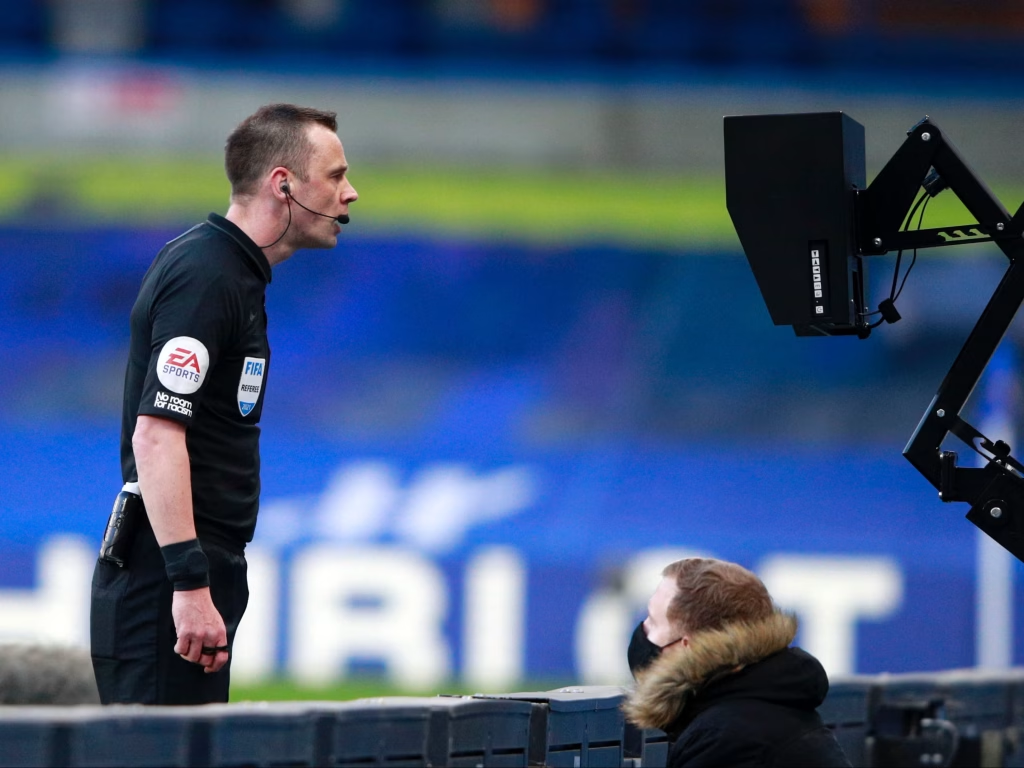
Refs checking VAR incase of any missed or accidental calls
The Modern Fan Experience
In 2025, soccer fandom lives online. Platforms like TikTok, X (formerly Twitter), and Instagram Reels dominate fan engagement, offering bite sized highlights, behind the scenes content, and player interactions. Clubs are hiring full time content teams to connect with younger audiences, and even smaller clubs are gaining global followings through creative social media storytelling.
Streaming platforms have also expanded access. Services like Apple TV+, Paramount+, and FIFA+ now broadcast matches in multiple languages, allowing fans everywhere to follow their favorite teams without cable. Soccer has become borderless, a 24/7 global conversation.
The World’s Game, Faster Than Ever
As 2025 unfolds, soccer remains the world’s most unifying sport, but it’s evolving faster than ever. Transfers are record breaking, leagues are expanding, and technology is rewriting the rules of how we watch and play the game.
Whether it’s a young star in Europe, a veteran in America, or a rising team in Africa, soccer’s heartbeat is global, and it shows no sign of slowing down.
The only constant in football today? Change itself. And for fans around the world, that’s exactly what keeps the beautiful game so endlessly exciting.